Skip to product information
1 of 2

Chomping at the Lit

STEAL Characterization Chart Graphic Organizer

STEAL Characterization Chart Graphic Organizer

Regular price $1.00 USD
Regular price Sale price $1.00 USD
Sale Sold out

Description

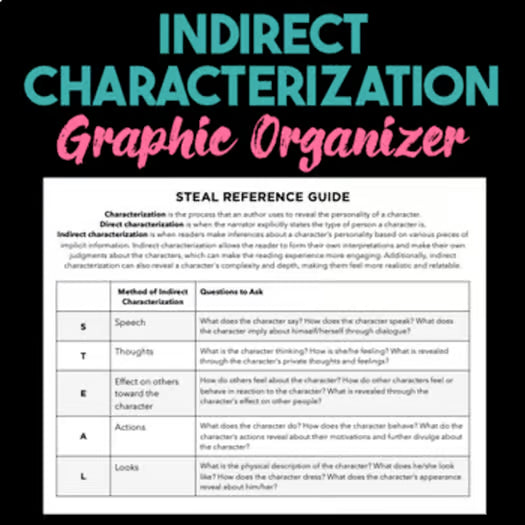
There are five main methods of indirect characterization: speech, thoughts, effect on others, actions, and looks, commonly abbreviated as STEAL. This STEAL chart and reference guide is designed to help students easily apply indirect characterization techniques to any short story, poem, or novel.

Characterization is the process an author uses to reveal a character’s personality. Direct characterization occurs when the narrator explicitly states what a character is like. Indirect characterization occurs when readers make inferences about a character based on implicit details rather than direct statements.

Indirect characterization encourages readers to form their own interpretations of a character based on evidence from the text. These insights often draw on personal experience, making reading more engaging and memorable. Examining multiple traits and behaviors also helps students recognize that characters can be complex, nuanced, and realistic.

The STEAL method breaks indirect characterization into five categories.
S represents what the character says through speech.
T represents the character’s thoughts.
E represents the effect the character has on others.
A represents the character’s actions.
L represents the character’s looks or physical appearance.

This resource includes a printable graphic organizer and reference guide in PDF format, making it easy to use as a classroom reference, guided practice activity, or independent analysis tool.

View full details

Description

There are five main methods of indirect characterization: speech, thoughts, effect on others, actions, and looks, commonly abbreviated as STEAL. This STEAL chart and reference guide is designed to help students easily apply indirect characterization techniques to any short story, poem, or novel.

Characterization is the process an author uses to reveal a character’s personality. Direct characterization occurs when the narrator explicitly states what a character is like. Indirect characterization occurs when readers make inferences about a character based on implicit details rather than direct statements.

Indirect characterization encourages readers to form their own interpretations of a character based on evidence from the text. These insights often draw on personal experience, making reading more engaging and memorable. Examining multiple traits and behaviors also helps students recognize that characters can be complex, nuanced, and realistic.

The STEAL method breaks indirect characterization into five categories.
S represents what the character says through speech.
T represents the character’s thoughts.
E represents the effect the character has on others.
A represents the character’s actions.
L represents the character’s looks or physical appearance.

This resource includes a printable graphic organizer and reference guide in PDF format, making it easy to use as a classroom reference, guided practice activity, or independent analysis tool.